
VRF Systems: The Best Choice for Office Buildings
Discover why Variable Refrigerant Flow (VRF) is the modern standard for office climate control.
What Exactly is a VRF or VRV System?
Variable Refrigerant Flow (VRF) or Variable Refrigerant Volume (VRV, the original term coined by Daikin) represents the pinnacle of commercial HVAC engineering. Unlike traditional systems where a large outdoor unit chills water or pushes air through massive ducts, a VRF system uses refrigerant gas as the heat transfer medium and allows multiple indoor units (up to 64 in some cases) to be connected to a single, powerful outdoor unit. The "magic" lies in its ability to vary and direct the exact amount of refrigerant needed by each specific zone of the building in real-time.
Independent Control: The End of Thermostat Wars
In any office building, thermal comfort is a constant subject of debate. The south-facing glass facade might be an oven at noon, requiring maximum cooling, while the north-facing offices might be freezing. With a heat recovery VRF system, it is possible to cool one area of the building while simultaneously heating another, using the heat extracted from the sunny side to warm the cold side. This provides personalized comfort for every employee, improving productivity and eliminating complaints, all while achieving unprecedented energy efficiency.
Energy Efficiency and Sustainable Certifications
VRF systems use state-of-the-art Inverter compressors that operate only at the speed necessary to meet the building's current demand. By not having to constantly turn large motors on and off, the savings on the electricity bill are massive. Furthermore, by eliminating large air ducts (which always suffer thermal losses), energy is transported much more efficiently through thin copper pipes. For commercial HVAC installation in Estepona or Marbella, opting for VRF is fundamental if the building seeks to obtain sustainability and energy efficiency certifications such as LEED or BREEAM.
Architectural Space Saving and Design Flexibility
Commercial space is expensive. Traditional systems require huge plant rooms on the roof and large vertical shafts to run giant air ducts. VRF systems, on the other hand, use compact and modular outdoor units that weigh less and fit into tight spaces. The refrigerant pipes are small and flexible, allowing you to maximize ceiling heights in the offices and greatly facilitating architectural integration during building design or renovation.
Simplified Maintenance and Centralized Control
On a management level, modern VRF systems integrate seamlessly with Building Management Systems (BMS). This allows the property manager to monitor energy consumption in real-time, detect faults before they become major breakdowns, and program automatic on/off schedules. Additionally, maintenance is simpler, as filters are easily accessible and error diagnostics are fully digitized, saving time and maintenance costs.
Phased Installation and Minimal Disruption
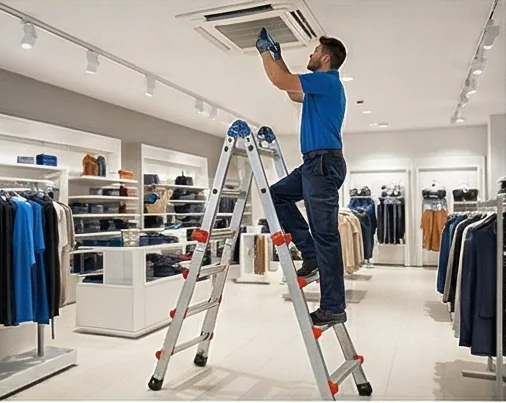
For office buildings that are being renovated or leased floor by floor, the VRF system offers an unparalleled advantage: its modularity. The system can be installed and commissioned floor by floor as new tenants move in, without interrupting the operation of the rest of the building. Indoor units can be of different types (ceiling cassettes, concealed ducted, wall-mounted) mixed on the same system according to the aesthetic needs of each office.
Planning the climate control for a new corporate project?
Our engineers specializing in commercial projects will design the perfect VRF system for your premises, guaranteeing maximum comfort, space savings, and unbeatable energy efficiency.
Contact Commercial EngineeringRelated Articles

Why HVAC Maintenance is Vital for Restaurants in Marbella
Prevent an AC failure from ruining your restaurant's service during peak season.
Hotel Air Conditioning: Key to Guest Comfort
A quiet and efficient air conditioning system is fundamental to securing 5-star reviews for your hotel.
HVAC for Restaurants on the Costa del Sol: Complete Guide
How to balance kitchen extraction with dining room comfort for a perfect experience that invites customers to stay.