
Underfloor Heating + Aerothermal: Ultimate Comfort
The perfect combination to keep your house warm in winter and cool in summer invisibly.
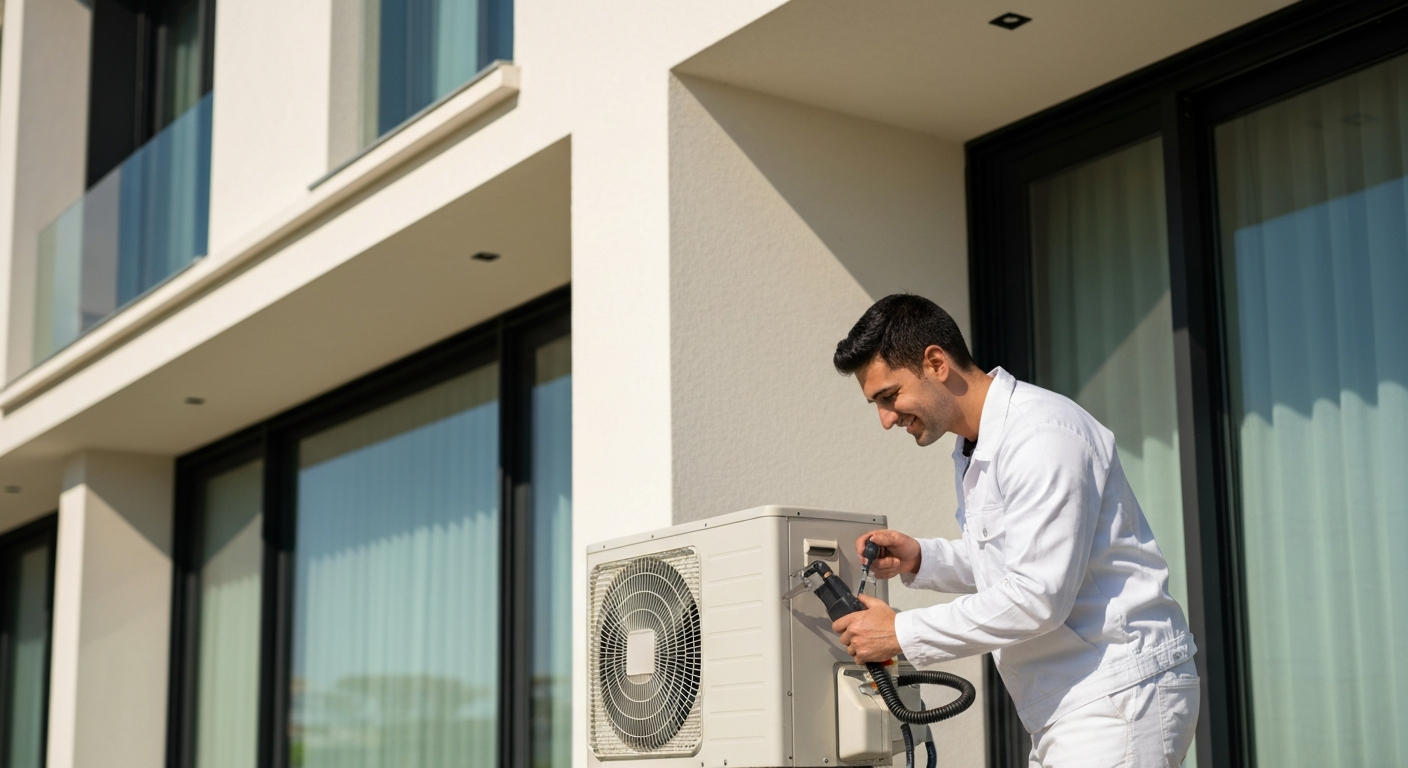
Why is underfloor heating the ideal emitter for aerothermal?
The combination of underfloor heating and aerothermal represents the state of the art in climate control for modern homes. The technical reason is simple: aerothermal (air-to-water heat pump) works optimally when operating at low temperatures, and underfloor heating is precisely the thermal emitter designed to operate at temperatures between 35°C and 45°C, much lower than the 60-70°C required by traditional radiators. The lower the water temperature the heat pump must generate, the higher its performance (COP). Therefore, this combination maximises the energy efficiency of the entire system, reducing electricity consumption to the minimum possible.
Furthermore, underfloor heating offers unparalleled thermal comfort. Unlike radiators or warm air projection, which heat the air unevenly (hotter near the emitter and cooler at the other end of the room), underfloor heating warms the entire floor surface uniformly. Heat is distributed by radiation, not convection, meaning there are no drafts, no dust is stirred up, and the sensation of comfort is immediate and enveloping.
Cooling underfloor heating: the Costa del Sol summer secret
One of the lesser-known but most appreciated advantages of underfloor heating in Marbella is its ability to cool in summer. The system can reverse its thermodynamic cycle to circulate cold water (between 16°C and 20°C) through the floor pipes, absorbing the heat accumulated in the house completely silently and without drafts. This "cooling floor" is especially pleasant on the Costa del Sol, where high summer temperatures make a cool surface under bare feet an absolute luxury.
For the cooling floor to work correctly, it is essential to control ambient humidity and prevent condensation. A professional system includes humidity and dew point probes that automatically regulate the water temperature so that condensation never forms on the floor, even on the most humid days of the Malaga summer.
Advantages of underfloor heating with aerothermal
- Impeccable aesthetics: No radiators, splits, or indoor units in sight. Underfloor heating is completely invisible, freeing up wall space and allowing unrestricted interior design.
- Absolute silence: With no fans or indoor units with moving parts, the system is completely silent. Ideal for bedrooms and rest areas.
- Healthy: It does not stir up dust or allergens, as it does not generate air currents. It is the recommended option for people with allergies or asthma.
- Uniform comfort: The temperature is constant throughout the room, with no hot or cold spots. The sensation of comfort is achieved with slightly lower air temperatures, which saves energy.
- Energy savings: By operating at low temperatures, the heat pump consumes less electricity, significantly reducing the energy bill.
- Dual function: Heating in winter and cooling in summer with the same system.
What does installation involve?
Underfloor heating installation is carried out during the construction or full renovation phase, as it requires lifting the existing floor. The process includes:
- Thermal insulation: A layer of insulation is placed over the slab so that the heat or cold is not lost to the ground, but directed upwards.
- Pipes: Circuits of plastic pipes (PEX or multilayer) are installed in a spiral or serpentine pattern, fixed to the insulation.
- Manifolds: The pipes are connected to manifolds (multiple valves) that distribute hot or cold water to each circuit.
- Screed: A layer of mortar is poured over the pipes to create the thermal mass that will store and distribute the heat.
- Finish: The final floor (porcelain, marble, engineered wood, etc.) is installed over the mortar.
Once installed, the system is connected to the aerothermal heat pump and the smart thermostats in each room, allowing individualised comfort control.
Is it compatible with any type of flooring?
Underfloor heating works with most finishing materials, but some are better conductors than others. Porcelain tile and natural stone (marble, travertine) are excellent conductors and maximise heat transfer. Natural wood is also compatible, although its thermal resistance is higher, so the system's response will be slightly slower. In any case, it is important to inform the installer of the planned floor type to correctly calculate the pipe spacing.
Frequently asked questions
How long does it take to heat a room?
Underfloor heating has greater thermal inertia than warm air. It takes between 1 and 3 hours to reach comfort temperature from cold, but once reached, it maintains it very stably. That is why it is ideal for continuous use, not for turning on and off constantly.
Can I have underfloor heating only in some rooms?
Yes, it is possible to combine underfloor heating in main areas (living room, bedrooms) with fan coils or splits in other areas. Zoning allows each area to be controlled independently.
Does the cooling floor generate condensation?
No, if the system is correctly installed and regulated. Humidity probes automatically adjust the cold water temperature so that it is always above the dew point, preventing condensation.
The invisible comfort your home deserves
Request a quote to install underfloor heating with aerothermal in your next renovation. An engineer will visit your property and provide a personalised study with no obligation.
Related Articles
5 Definitive Ways to Reduce Your AC Energy Bill
Practical tips to enjoy a cool home on the Costa del Sol without overpaying on your electricity bill.
Inverter Technology Explained: Is It Worth the Investment?
Discover exactly how Inverter technology works, why it eliminates consumption spikes, and how it pays for itself on the Costa del Sol.
Best Thermostat Settings for Summer in Marbella
Learn how to adjust your thermostat and leverage smart home tech to maximize comfort in your villa and minimize electricity costs during the hottest months.